
- 01184050390
Search
Recent Post
Tags
- Tax News
- June 23, 2026
- 12:58 pm
Self Assessment Deadline 2026: Everything You Need to Know
If you’re self-employed, a landlord, or earn untaxed income, the Self Assessment deadline is one date you cannot afford to miss. Every year, thousands of people across Reading and London face avoidable penalties simply because they left things too late — or misunderstood what HMRC actually expects from them.
At InsightAccountax, we help clients prepare well ahead of the deadline so the process feels calm rather than chaotic. Here’s exactly what you need to know for this tax year.
Key Dates You Need to Remember
The tax year runs from 6 April to 5 April the following year. For the 2025/26 tax year:
- 31 October 2026 — deadline for paper tax returns
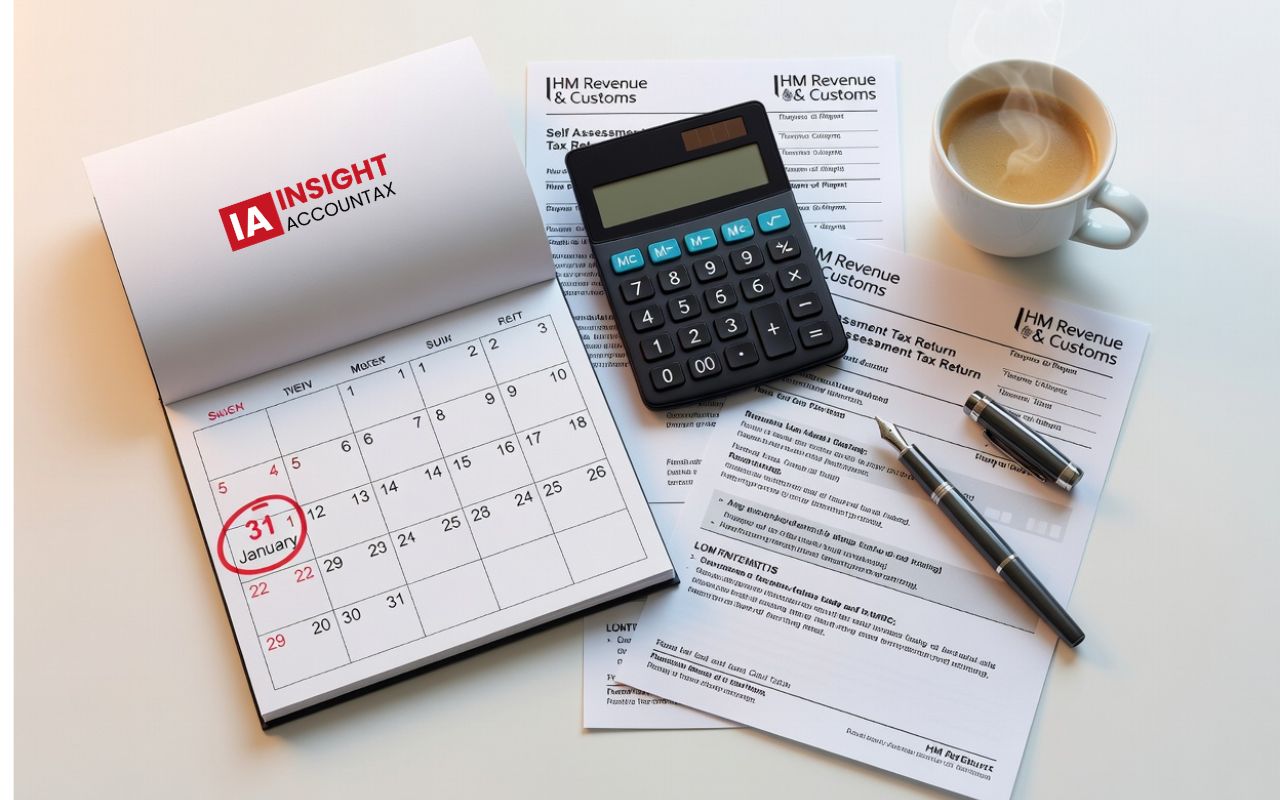
- 31 January 2027 — deadline for online tax returns and full payment of tax owed
- 31 January 2027 — deadline for your first Payment on Account, if applicable
Missing the 31 January deadline triggers an automatic £100 penalty, even if you owe no tax. The longer you delay, the more the penalties escalate, with daily fines after three months and additional charges after six and twelve months.
Who Needs to File a Self Assessment Return
You’ll typically need to file if you are:
- Self-employed as a sole trader earning more than £1,000
- A partner in a business partnership
- A landlord earning rental income above the property allowance
- Earning income from dividends, savings interest, or foreign sources above certain thresholds
- A higher earner who needs to repay Child Benefit through the High Income Child Benefit Charge
- Claiming certain tax reliefs that require a return to process them
If you’re unsure whether you fall into one of these categories, it’s worth checking early rather than assuming you’re exempt.
Common Mistakes That Delay Filing
Year after year, we see the same avoidable issues:
Forgetting your UTR or Government Gateway login. If this is your first time filing, you must register with HMRC well in advance, as your Unique Taxpayer Reference can take up to 10 working days to arrive by post.
Missing income sources. Side income from freelance work, online selling, or rental properties is often left out, which can trigger HMRC enquiries later.
Incorrect expense claims. Claiming personal expenses as business costs, or failing to claim allowable expenses you’re entitled to, both create problems — one risks penalties, the other means overpaying tax unnecessarily.
Leaving it until January. The most common mistake of all. Accountants get fully booked in the final weeks of January, and rushed returns are more likely to contain errors.
How to Prepare Well Ahead of Time
- Gather your records early. Bank statements, invoices, receipts, and any P60s or P45s should be collected as soon as the tax year ends in April.
- Reconcile your bookkeeping monthly. If you use cloud accounting software like Xero or QuickBooks, staying current makes year-end filing dramatically faster.
- Set aside tax as you earn. A simple rule of thumb is to set aside 25–30% of your self-employed income in a separate account to avoid a painful bill in January.
- Speak to an accountant before October, not January. Early engagement means we can identify tax-saving opportunities you’d otherwise miss under time pressure.
What Happens If You Can’t Pay on Time
If you know you won’t be able to pay your tax bill in full by 31 January, don’t ignore it. HMRC offers a Time to Pay arrangement that lets you spread payments, provided you set this up before the deadline passes. Contacting HMRC proactively is always better than missing the payment and accumulating interest and penalties.
How InsightAccountax Can Help
We handle the entire Self Assessment process for our clients — from registering with HMRC for the first time, to reconciling your books, to identifying every legitimate deduction available to you. Our goal is simple: file accurately, file early, and make sure you never pay more tax than you need to.
If your Self Assessment return is on your mind, get in touch with our Reading-based team today. We’ll take it off your plate entirely.
This article is for general information purposes and does not constitute tax advice for your specific circumstances. Speak to a qualified accountant before making tax decisions.